Surfaces That Handle UV and Salt Exposure
Paver Repair & Sealing in Naples for cracked joints, sunken sections, and unsealed hardscape showing wear
Pavers that sink in corners, joints that widen and collect weeds, and surfaces that fade or stain despite cleaning—these conditions develop when Southwest Florida's UV exposure and salt spray degrade unprotected hardscape. Luster Outdoor Solutions Inc repairs damaged sections and applies protective sealing that extends paver life by five to seven years compared to unsealed installations. The work targets structural issues first, then adds a barrier that slows weathering without trapping moisture beneath the surface.
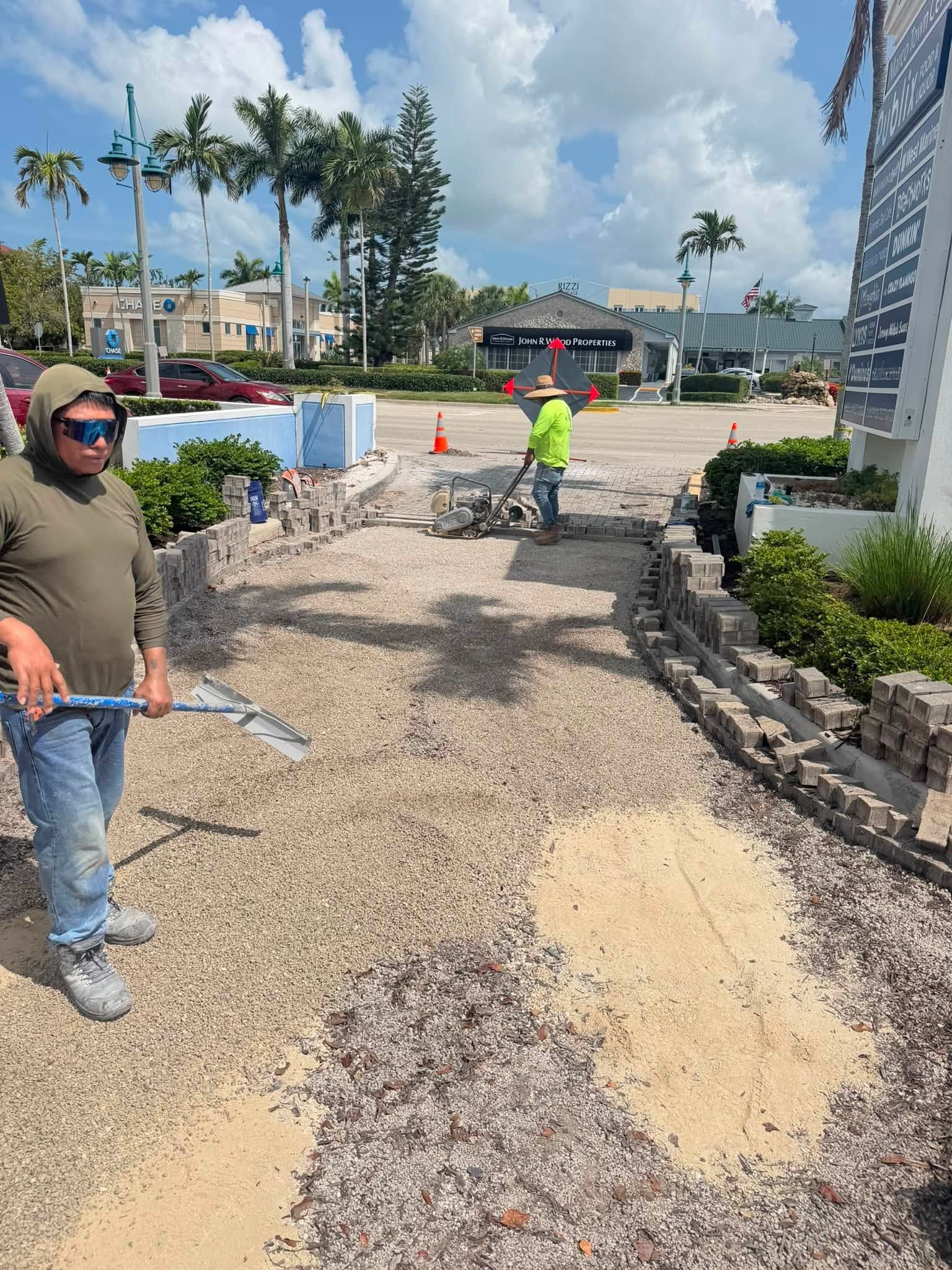
Repair starts with joint inspection to identify where water intrusion has destabilized the base, followed by damaged paver removal and re-leveling to restore the original plane. Polymeric sand stabilization replaces loose joint material, and sealer application—either penetrating or topical depending on paver type—locks out moisture while allowing vapor transmission from below.
Request a detailed estimate based on your current hardscape condition and joint stability.
What Proper Sealing Requires in Coastal Climates
Joint inspection reveals where pavers have shifted due to base erosion or where grout has washed out from repeated rain cycles. Damaged sections are removed, re-leveled on a corrected base, and set with refreshed grout before polymeric sand fills and locks the joints tight against future water intrusion.
Once sealing completes, you'll notice water beading on the surface instead of soaking into the paver face, joint sand that stays in place instead of washing onto adjacent turf, and color that holds longer under direct sun because the sealer blocks UV penetration into the paver's surface layer. Sealed pavers also resist mold and algae growth that unsealed surfaces accumulate in Naples' humid conditions.
Sealer choice depends on whether you want a matte finish that looks natural or a wet-look gloss that deepens color—penetrating sealers preserve the original appearance, while topical sealers add sheen and slightly more surface protection. Both options require reapplication every five to seven years as UV exposure gradually breaks down the protective layer.
Answers to Frequent Hardscape Maintenance Questions
Homeowners in Bonita Springs and Naples corridors often ask about timing for sealing and whether repairs can be staged across multiple visits.
What causes pavers to sink in specific areas?
Sinking occurs where the base material erodes from water intrusion through joints, where soil beneath the base settles unevenly, or where the original installation used insufficient compaction—repairing these sections requires re-leveling the base before resetting pavers.
How long does sealer last on pool decks and patios?
Sealer durability in Southwest Florida ranges from five to seven years depending on UV exposure, foot traffic, and whether the surface is regularly cleaned—pool deck sealers break down faster due to chlorine exposure and constant moisture.
When should I seal pavers after installation?
New pavers should cure for at least 30 days before sealing to allow any efflorescence (mineral salts rising to the surface) to appear and be cleaned off, ensuring the sealer bonds to clean, stable material.
How does polymeric sand differ from regular joint sand?
Polymeric sand contains additives that harden when activated with water, creating a semi-rigid joint that resists washout and prevents weed growth—regular sand shifts and erodes with each rain cycle in Naples' heavy seasonal weather.
What preparation happens before sealer goes on?
Surfaces must be pressure washed to remove mold, algae, and embedded dirt, then allowed to dry completely—sealing over moisture or contaminants traps them beneath the sealer and causes bonding failure within months.
Luster Outdoor Solutions Inc schedules repair and sealing work between larger commercial projects, offering flexibility for residential hardscape maintenance. Contact us to arrange an inspection of your paver surfaces and joint condition before damage spreads further.